Amazons

Amazon species can vary greatly. Some are easygoing, some are difficult to deal with. Amazon parrots can be very smart (depending on the species). Some species are even capable of vocabulary! But others just mimic a few words. Some amazons purr when they are happy. Amazons use their beak for balancing, don't pull your hand away if he reaches his beak out to step onto you. If you remove your hand he will try to bite. In the wild, they live from northern Mexico to Northern Argentina. Some live in the Caribbean Islands but these parrots are endangered. Males and females look alike, so for accuracy, they should have DNA or surgical testing. These birds are very Loyal, but some can also be stubborn. I also have an opinion that they have the best body language of the parrots. You can tell if he is going to bite by fanning his tail feathers and dilating his eyes. They also tend to be sensitive to becoming obese, so limiting seeds and giving a good diet is necessary.

There are more than 30 species of amazon parrots. Only about some of them are kept as pets. I can give you a list. Species include:

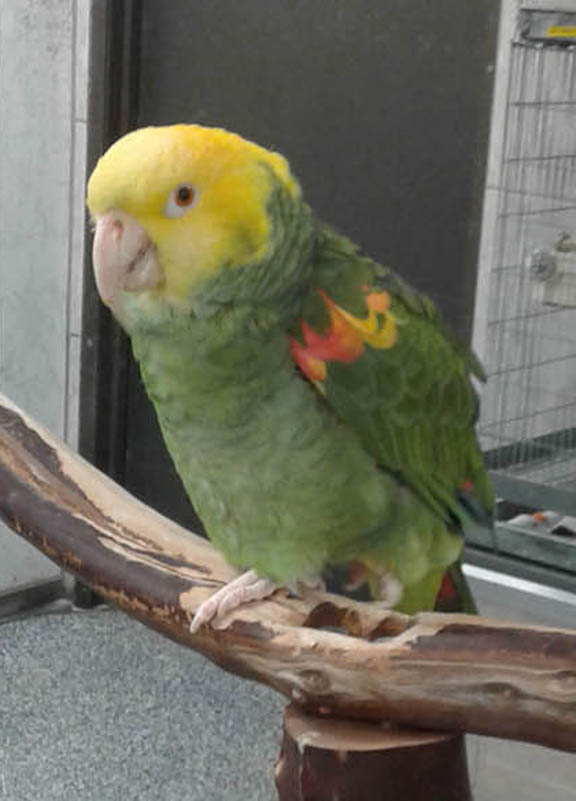
Double Yellow Headed Amazon

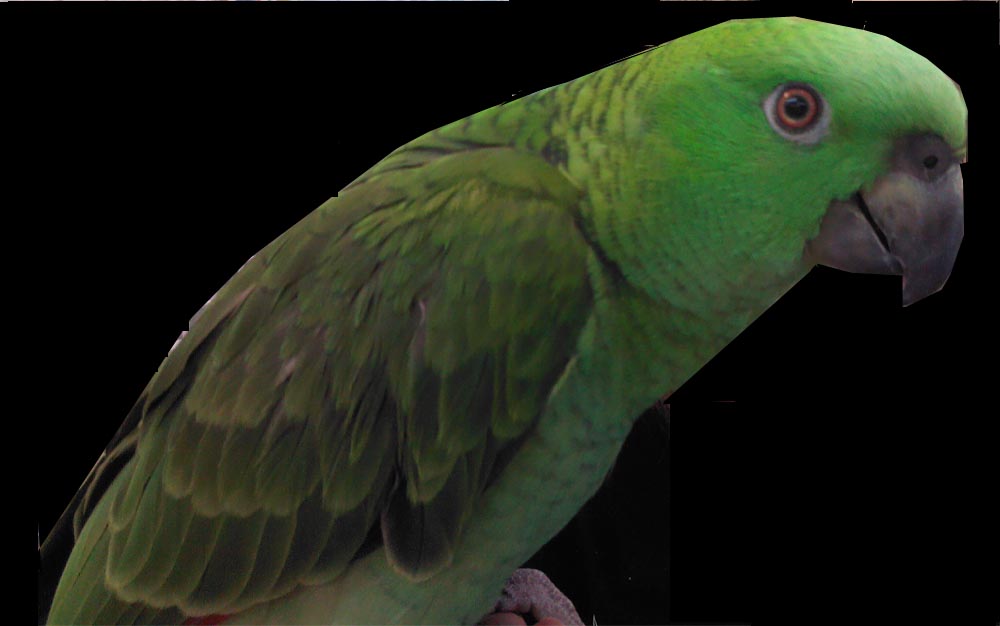
Yellow Naped Amazon

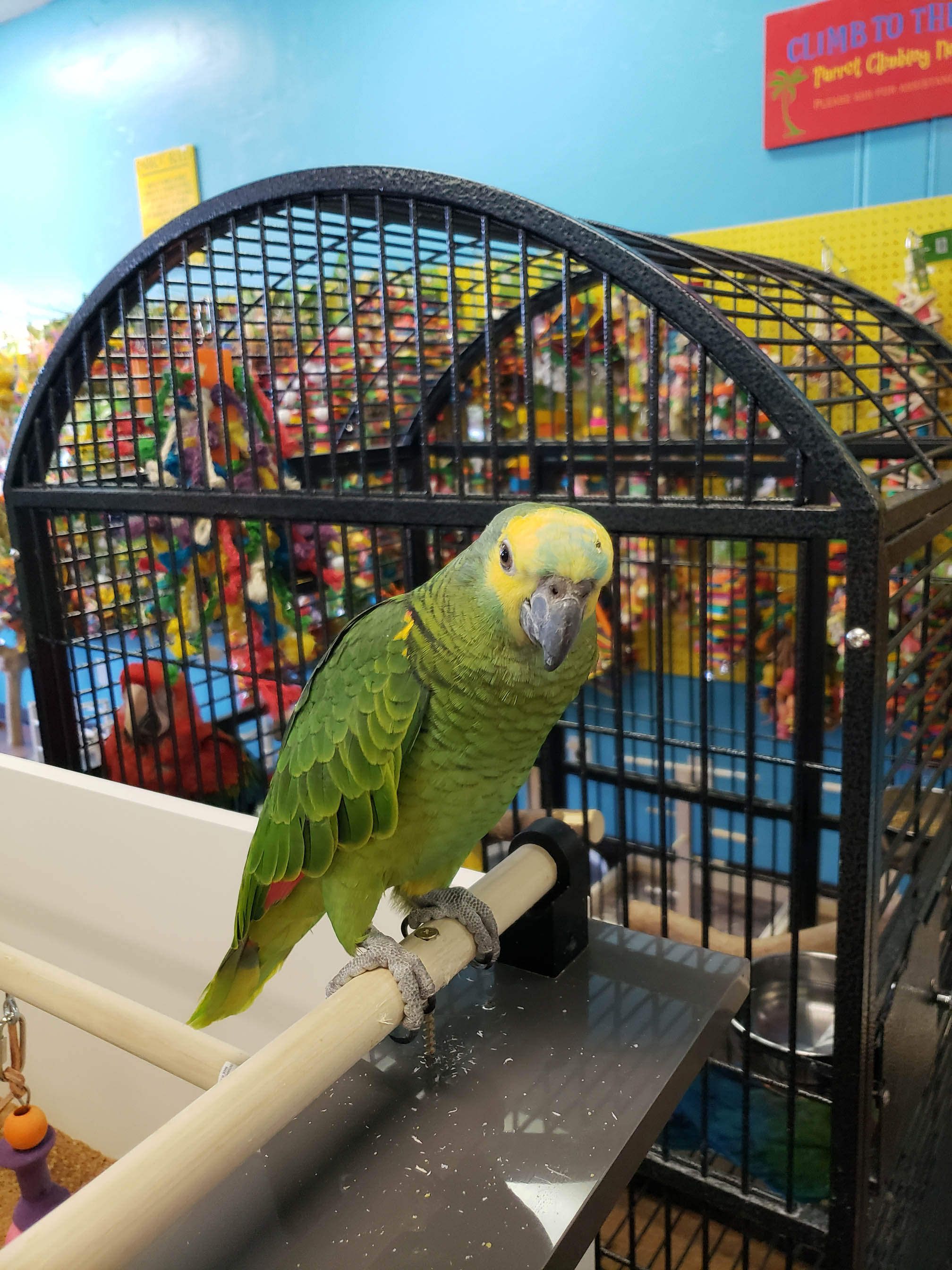
Blue Fronted Amazon

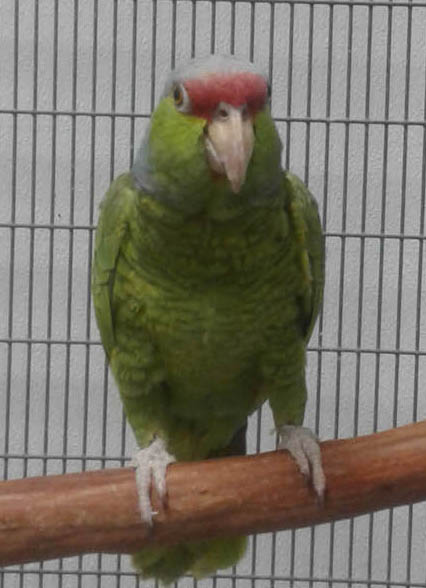
Lilac Crowned Amazon

Spectaclated Amazon

Yellow Faced Amazon

Yellow Lored Amazon

Double Yellow Headed Amazon

double yellow-headed

The double yellow-headed Amazon is about 15 inches long (10 inches in body height) and weighs 350-550 grams. They are mostly green with a solid yellow head, the younger birds of these species have less yellow on the head. They also have a small amount of red on their shoulders. They have gray feet and black nails. If properly socialized when they are younger and the owner continues to do this they make great pets but the ones who weren't trained properly can become nippy and some can even become "one-person" birds. These birds can be loud and need to live in a house. The cage must be at least 48x48x48 or larger with a bar scaping of 3/4 to 1 inch.

Yellow Naped Amazon

yellow-naped

The yellow-naped Amazon is 18 inches in length (12 inches in body height) and weighs 480 to 680 grams. This Amazon is mostly green, with a yellow spot on its neck and some yellow on its tail feathers. Younger birds lack yellow markings. These amazons can make great pets if properly socialized, or they can become "one-person" birds. These birds are loud and can only live in a house. The cage should be at least 48x48x48 because these amazons are bigger than some species. They also need a bar spacing of 3/4 to 1 inch.

Blue Fronted Amazon

Blue Front

The Blue fronted Amazon is about 15 inches long (10 inches in body height) and weighs 275-500 grams. Like the "hot amazons", these birds require a lot of attention and can become "one-person" birds if not properly socialized. They can be loud like some amazons so these birds should be in a house. The cage should be at least 48x48x48 with bar spacing of 3/4 to 1 inch.

Lilac Crown

Lilac Crowned Amazon

The Lilac Crowned amazon is about 13 inches long (8 inches in body height) and weighs 325 grams. It is a mainly green parrot with a lilac head, with a little red in the front. They are more easygoing than most other species of Amazons and sometimes even shy. These birds are quieter than most amazons, so they can live in an apartment. The cage should be 36x36x36 with bar spacing of 3/4 to 1 inch.

Spectaclated Amazon

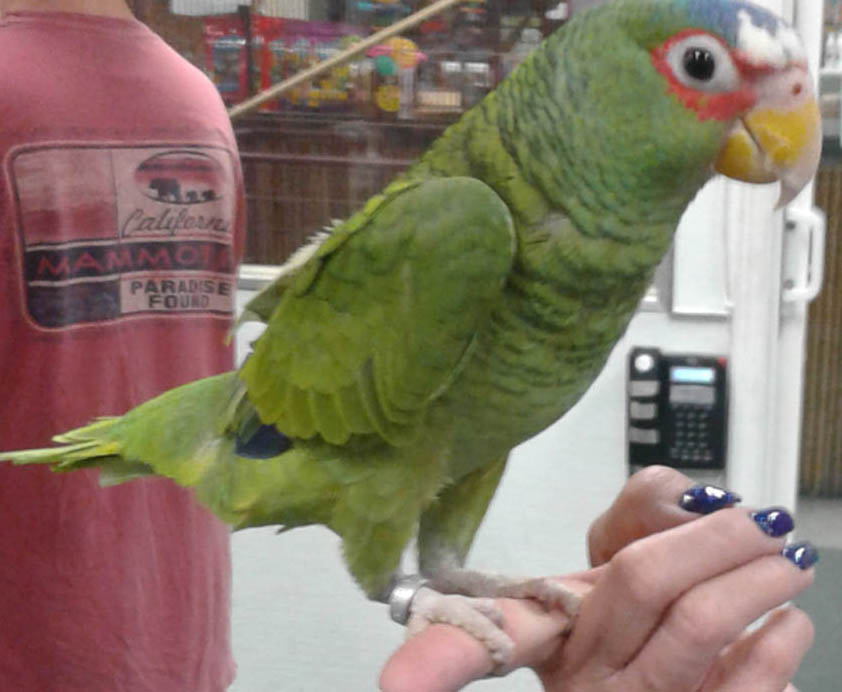
Spectaclated Amazon

The Spectacled Amazon (or White-Fronted Amazon) is about 10 inches long (6 inches in body height) and weighs 188-242 grams. They have white and red in front of their face, with red eye-rings, and are mainly green. Like the Lilac Crown Amazon, they are more easygoing than most other species of Amazons and sometimes even shy. These birds are quieter than most amazons, so they can live in an apartment. The cage should be at least 36x36x36 with a bar spacing of 3/4 to 1 inch.

Yellow Faced Amazon

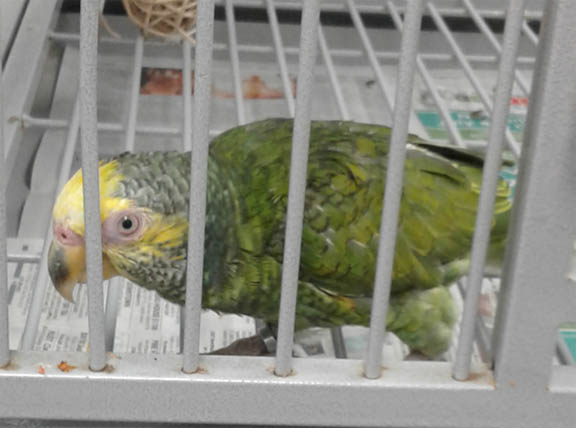
Yellow Faced Amazon

The Yellow-Faced amazon is about 11 inches long (8 inches in body height). They are one of the rarer amazons. They are one of the hot amazons in personality as well as the yellow nape, double yellow head, and blue front. They have a mainly green body and a yellow face, as the name says. These birds need to live in a house because they are just as loud as the hot amazons. The cage should be at least 36x36x36 with a bar spacing of 3/4 to 1 inch.

Yellow lored Amazon

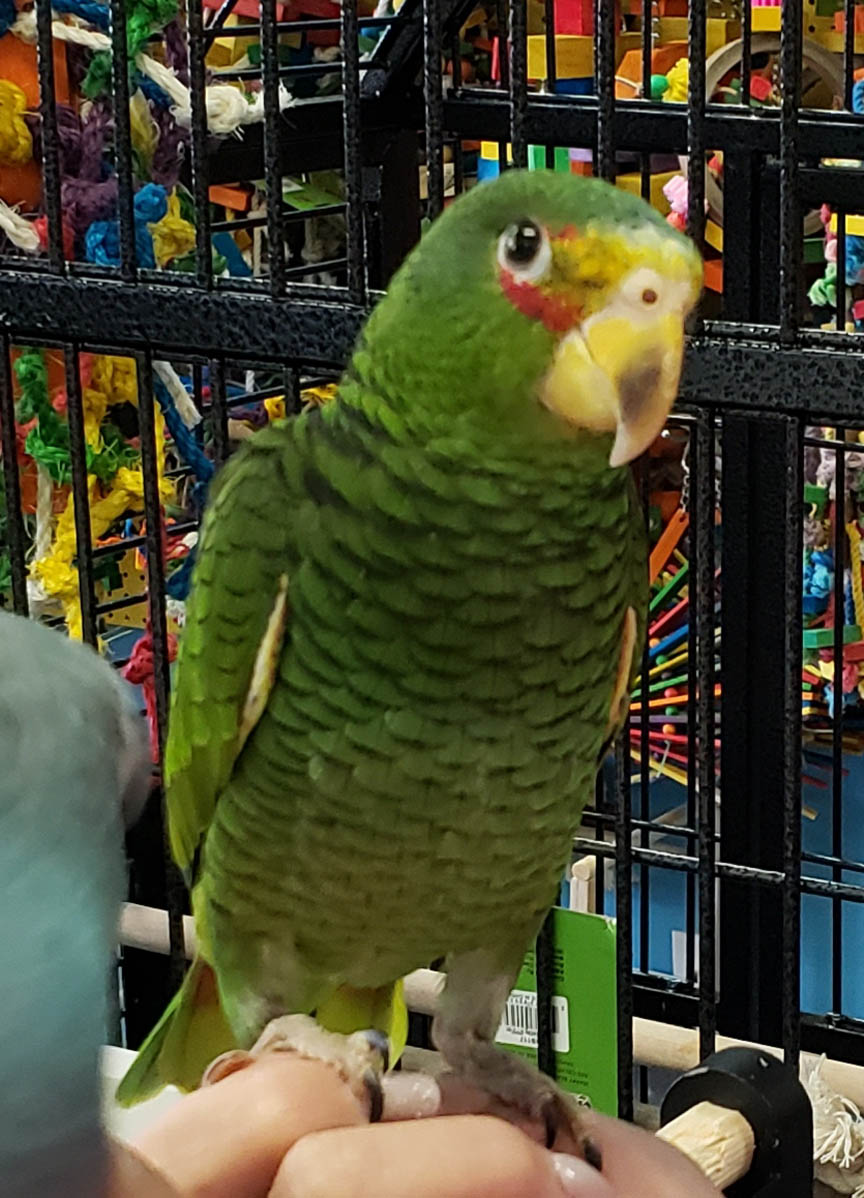
Yellow Lored Amazon

The yellow-lored amazon is about 9 inches long (6 inches body height). Because their status in captivity is rare, their weight is unknown. Although shy, once they bond to a person they have a sweet personality towards him/her. Our name for our Amazon is "Simchah" Jewish for "joy". She got her name because my mother and her bonded right away, even though she is still a little scared of me (but she's letting me get closer and closer). My mother currently owns this bird. These birds need to live in a house because they need a lot of space. The cage should be at least 36x36x36 with a bar spacing of 3/4 to 1 inch.

Facts

*Amazon parrots got their name because most species live in the Amazon. Even though they can be from Mexico to Argentina .

*Several years ago, my cousin found a Mexican Red Headed Amazon on the ground and rescued it, and gave it to a caring family.

*My veterinarian owns a blue-fronted Amazon, unfortunately, he is a one-person bird, and he also seems to like men better than women.

*Some species of amazons live on the Caribbean islands, however, these are endangered and are rarely seen as pets.

Experience level: Advanced

Length: 9-18 inches, depending on species

Weight: 270-800 grams, depending on species.

Dwelling: Apartment or House, Depending on the bird.

Noise: Low-moderate to Moderate.

Mess: Moderate-severe, needs cleaning at least twice a week.

Children: Older children/none.

Talking and Tricks: Some species are very capable, can have a vocabulary and most are capable of Very Advanced tricks. Others are intelligent, but not as smart.

Price: Bird=$1000 Housing and accessories=$2000 Monthly=$80

Powder allergy problems: No

Legal Requirements: None, except for endangered birds (like Imperal, red browed, and various others) Which need a permit or for breeding.